
Emergency Dentist in Broome
Something hurts? You don’t need to work out what’s wrong before you book.
Ouch. Toothache has terrible timing.
We’ll get you comfortable first.
Whether it started five minutes ago or has been quietly testing your patience for a week, you don’t need to work out what’s wrong before you book.
Choose a Toothache appointment online, or call us. We’ll take a look, help get you comfortable and talk you through what happens next.
If it’s serious, call 000.
If swelling is affecting your breathing or swallowing, or you’ve had a serious injury to your face, call 000 or go to the hospital emergency department.
Not sure if it counts as a toothache?
- Pain or throbbing
- A broken or chipped tooth
- A lost filling or crown
- Swelling
- Sensitivity that lingers
- Wisdom teeth playing up
- A knocked-out tooth
- A broken denture
- Or something that just doesn’t feel right
You don’t need to work out what’s wrong.
That’s our job. If something is bothering you and it can’t wait, contact us and we’ll do our best to see you as soon as possible.
How to get seen
Book a Toothache appointment online and choose the first time that suits you.
Can’t find a time? Call us on 08 9192 1624. Tell us what’s happening, where it hurts and whether there’s any swelling, and we’ll do our best to see you as soon as possible.
We’re open:
Monday–Thursday: 8am–5pm
Friday: 7am–3pm
Saturday: By appointment
If we’re closed
If swelling is affecting your breathing or swallowing, or you’ve had a serious injury to your face, don’t wait for us to open. Call 000 or go to the hospital emergency department.
For anything else, you can still book a Toothache appointment online while we’re closed, or call us as soon as we open.

While you wait
These are simple first steps to help you stay comfortable until you’re seen. They aren’t a replacement for an appointment.
- Toothache: over-the-counter pain relief may help, taken as directed on the pack and only if it’s safe for you. If hot, cold or sweet things set it off, avoid them for now.
- Swelling: an ice pack on the outside of your face, 20 minutes on and 20 minutes off, can help. If you don’t have one, a bag of frozen peas wrapped in a paper towel works. Swelling that is getting worse needs to be seen promptly.
- A broken or chipped tooth: keep any pieces you can find, rinse gently with warm water and try not to chew on that side.
- A lost filling or crown: keep the crown somewhere safe and bring it with you. Try not to chew on that side.
- A knocked-out adult tooth: hold it by the white part, not the root. If it’s dirty, rinse it briefly in milk. If you can, place it gently back in its socket and bite on a clean cloth to hold it there; if not, keep it in milk. Then call us straight away, because time matters.
- A knocked-out baby tooth: don’t try to put it back. Keep it, and call us.
- Bleeding: fold a clean gauze or handkerchief and bite firmly on it for 30 minutes. If bleeding doesn’t settle, contact us or your local hospital.
What happens at your appointment
You don’t need to work out whether you need a filling, root canal or extraction before you arrive. That’s our job.
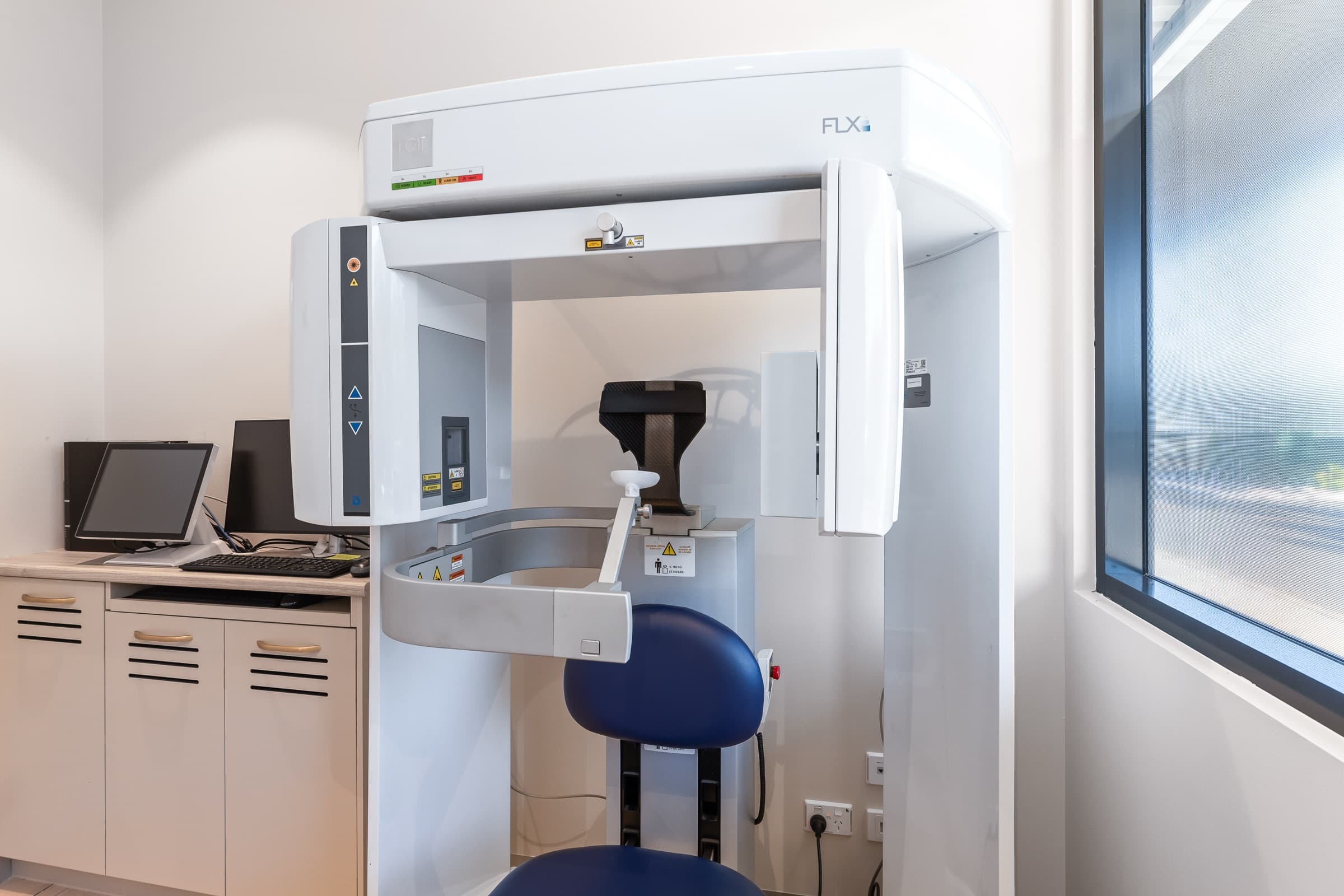
We’ll examine the area, take any necessary X-rays or 3D imaging and work out where the pain is coming from.
The first priority is getting you comfortable and understanding the problem. Then we can explain what can be done about it, what each option involves and what it costs. Sometimes that means fixing it on the day. Sometimes it means getting you comfortable first and planning the rest of the treatment for another appointment.
Teeth can hurt for plenty of reasons, from decay and cracks to gum problems, grinding, an issue with your bite or inflammation inside the tooth. If you need a filling, crown or root canal treatment, you can read more about restorative dentistry.
What it costs
The cost depends on what we find and what’s needed. Where possible, we’ll explain your options and the expected costs before we go ahead, and if something changes during treatment, we’ll talk to you about it.
If you have eligible private health cover, HICAPS allows you to process your claim at the clinic. Your rebate depends on your health fund, level of cover and the treatment provided.
If your care is funded through an Indigenous Lands Trust or Aboriginal corporation, we can first seek approval for an emergency appointment. In some circumstances, patients experiencing acute or chronic dental pain may also be eligible to apply for early release of superannuation on compassionate grounds. Eligibility is determined under the relevant rules and approval is not guaranteed.
Help, my tooth hurts
Toothache?Broken tooth?Call us.
The first priority is getting you comfortable and understanding the problem.
Do you see dental emergencies in Broome?
Yes.
If you have toothache, swelling, a broken or knocked-out tooth, a broken filling or crown, a broken denture or another dental problem that can’t wait, contact us and we’ll do our best to see you as soon as possible.
If swelling is affecting your breathing or swallowing, or you’ve had a serious injury to your face, call 000 or attend the hospital emergency department.
I have a toothache. What should I do?
Book a Toothache Appointment or call us.
You don’t need to work out whether you need a filling, root canal or extraction before you arrive. That’s our job.
We’ll examine the area, take any necessary X-rays or 3D imaging and work out where the pain is coming from.
The first priority is getting you comfortable and understanding the problem. Then we can explain what can be done about it.
Does a toothache mean I need a root canal?
Not necessarily.
Teeth can hurt for plenty of reasons, from decay and cracks to gum problems, grinding, an issue with your bite or inflammation inside the tooth.
If the nerve inside a tooth has become irreversibly inflamed or infected, root canal treatment may be one option to try to save the tooth.
But we won’t know that until we assess it.
Toothache is a symptom. Root canal treatment is one possible treatment, not an automatic conclusion.
Is it better to have a root canal or have the tooth removed?
There isn’t one answer that applies to everyone.
If a tooth can be predictably restored and has a reasonable long-term outlook, root canal treatment may allow you to keep your natural tooth.
If the tooth is badly damaged, fractured, has insufficient remaining structure or has a poor prognosis for another reason, extraction may be the more appropriate option.
There are also practical considerations, including treatment complexity, time, cost and what you would like to do if the tooth is removed.
We’ll explain the options, the likely prognosis and the costs involved so you can make an informed decision.
Can you remove wisdom teeth in Broome?
Yes, many wisdom teeth can be assessed and removed at DNTL Code.
Before recommending removal, we’ll assess the tooth, your symptoms and its position.
Where appropriate, our 3D CBCT allows us to assess the relationship between wisdom teeth and important structures such as the nerves in the lower jaw or the sinuses in the upper jaw before treatment.
Some wisdom teeth are more complex and are better managed by a specialist. If we believe referral is the safer or more appropriate option, we’ll tell you.
Being able to do something locally doesn’t mean we should do everything locally. The right care comes first.